
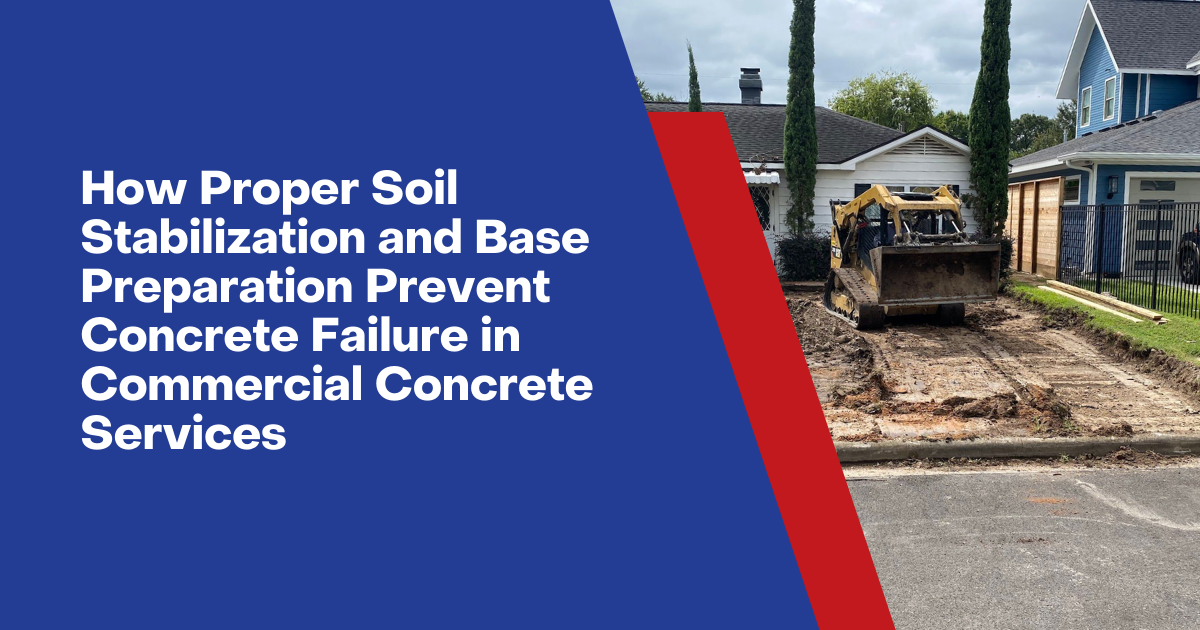

When it comes to commercial concrete construction, most eyes focus on the visible surface, the polished slab, the neatly finished edges, the durability of the finish. But ask any experienced concrete contractor, and they’ll tell you: what’s underneath the slab is what truly matters.
In states like Texas, where soil conditions are notoriously inconsistent, proper soil stabilization and base preparation aren’t just recommended, they’re essential. From parking lots to slab-on-grade foundations, a project’s longevity starts in the dirt.
In this article, we’ll explore how professional soil stabilization and base prep reduce risks, prevent failures, and form the foundation of high-quality Commercial Concrete Services.
Why Soil Stabilization Is the First Line of Defense Against Concrete Failure
Texas soil is famous, but for all the wrong reasons. Expansive clays, fluctuating moisture levels, and poorly compacted subgrades can sabotage even the most well-executed concrete pours. That’s why soil stabilization is a foundational part of any successful commercial concrete project.
The Impact of Poor Soil Conditions
Improperly prepared soil can lead to:
- Differential settlement
- Structural cracking
- Premature surface degradation
- Drainage issues
- Increased long-term maintenance costs
These issues often surface months or even years after completion, turning minor missteps in preparation into costly repairs.
What Is Soil Lime Stabilization, and Why Is It Crucial?
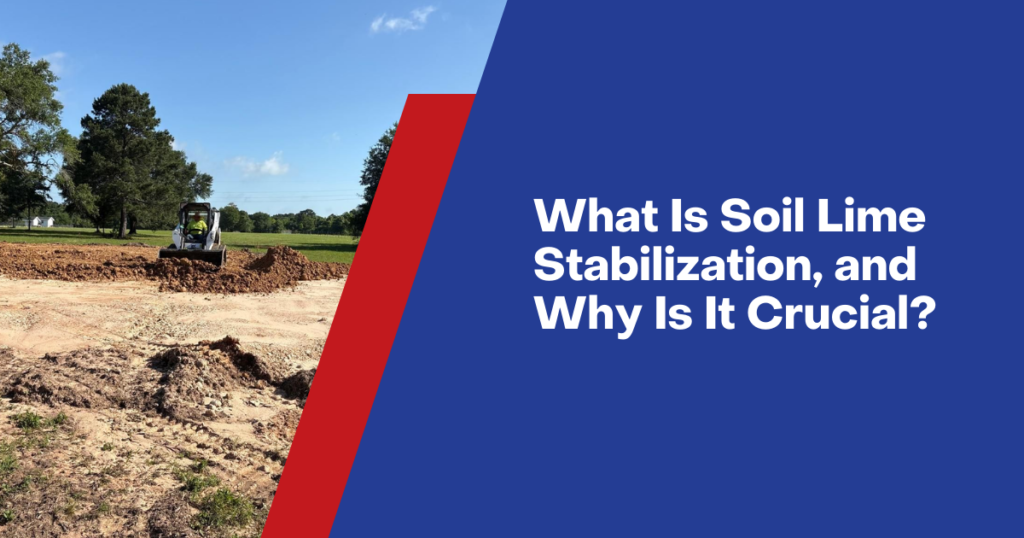
Soil lime stabilization is a process that involves mixing lime into clay-rich soils to chemically alter their structure, reducing plasticity and increasing strength. This is especially vital in regions where moisture-sensitive soils are common. Lime treatment transforms unstable soil into a durable subgrade that can bear heavy commercial loads.
Common Applications:
- Retail and residential slab foundations
- Commercial drive lanes
- High-traffic parking lots
- ADA-compliant sidewalks
Stabilizing the soil ensures the slab remains stable even as environmental conditions change, a must-have in Texas’s fluctuating weather.
The Role of Base Preparation in Long-Term Commercial Concrete Services
Think the soil is enough? Think again. Depending on the project, architects can ask for crushed concrete base, the structural layer that distributes loads and facilitates drainage beneath the slab.
Xativa Concrete Contractors ensures every base layer:
- Minimizes voids
- Supports even slab thickness
- Prevents water retention
- Enhances compaction and density
- Improves finishing results
This phase is often rushed or overlooked by less experienced contractors, but skipping or shortcutting base preparation is one of the leading causes of concrete failure in commercial jobs.
Why This Matters Most in Commercial Concrete Services in Houston, TX
Soil and base preparation impact more than just structural performance, they also affect:
- Project timelines and inspections
- Rework and punch list items
- Occupancy readiness
- Client satisfaction
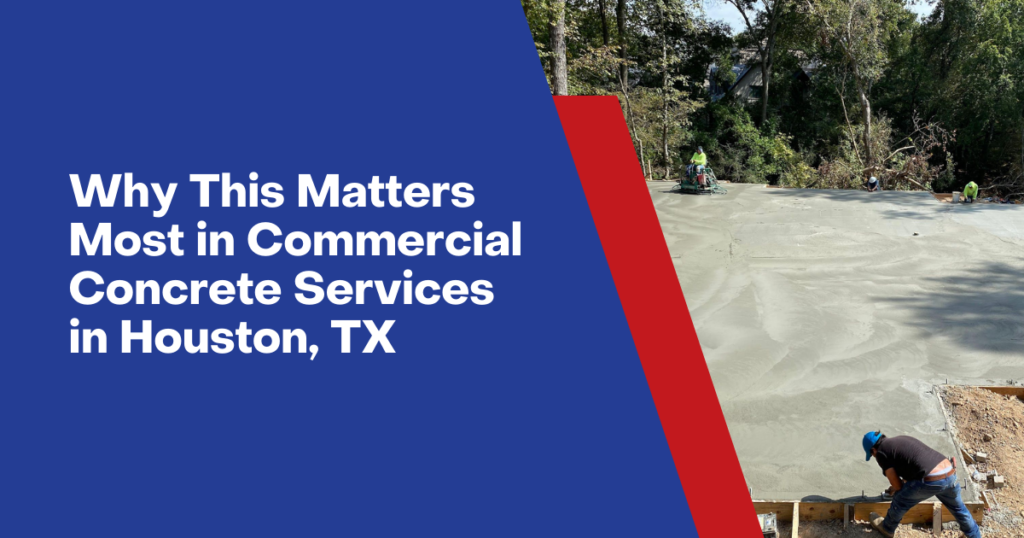
For commercial concrete contractors in areas like Houston, TX, where every job site has unique soil profiles, these foundational steps are not optional, they’re critical.
The Xativa Construction Difference: A Fully Integrated Approach
Here’s where Xativa sets itself apart: they handle everything from soil stabilization to finishing in-house. No third-party miscommunications. No scheduling mishaps. Just a single, accountable contractor executing every step with precision.
Their Process Includes:
- Lime or Cement Soil Treatment
- Crushed Base Installation
- Laser Grading for Level Surfaces
- Concrete Placement & Finishing
- Saw Cutting and Curing
This turnkey process means fewer delays, better outcomes, and slabs that perform for decades.

What Happens When You Skip These Steps?
Concrete failure rarely happens overnight, it’s a slow, costly breakdown. When base and soil stabilization are skipped or poorly done, you risk:
- Slab heaving or settling
- Cracks that spread and worsen
- Uneven walkways and trip hazards
- Water pooling under slabs
- Frequent repairs and patch jobs
Think about it: would you build a skyscraper on sand? Then why pour your slab on a poorly prepped site?
Why Developers and Contractors Choose Xativa Construction
Xativa’ s commitment to “Built to Last. Poured with Precision.” isn’t just a slogan, it’s how they do business.
Their team delivers:
- Professional project management
- Fast, clear communication
- Full-scope concrete services
- Engineering-grade soil lime stabilization
- Reliable results, every time
From concrete slab contractors to crushed concrete bases, Xativa brings the team, tools, and expertise to deliver long-lasting performance.

5 Pro Tips for Project Managers and Builders
Want to ensure success on your next commercial concrete job? Here’s how to apply these insights:
✔ Test the soil early. Don’t wait until forms are up to evaluate ground conditions.
✔ Use lime stabilization on clay-heavy or moisture-prone sites.
✔ Demand documentation for compaction and density.
✔ Inspect the base thickness and compaction, not just the material.
✔ Work with one contractor from ground prep through finishing.
Avoiding fragmented crews and accountability gaps is one of the best ways to protect your schedule, and your reputation.
The Texas Commercial Concrete Market: Trends, Stats, and What They Mean for Your Project
The demand for commercial concrete services in Houston, TX is not only stable, it’s accelerating. With over $50 billion in construction spending projected for 2025 and 1,200–1,400 new residents moving to Texas every day, the scale of development is pushing concrete contractors to elevate both efficiency and performance.
Industry Size and Spending Power
- The concrete contractor industry alone is expected to generate $10–11 billion in Texas by 2025.
- Commercial concrete makes up a critical 10–15% of total construction budgets. Foundation work, in particular, accounts for about 11.5% of total project costs in Texas builds.
Key Drivers of Growth
Several external and internal factors are fueling this growth:
- Booming population and business formation are driving the need for more commercial buildings, data centers, warehouses, and retail spaces.
- Private nonresidential construction and housing starts are top indicators supporting the expanding footprint of commercial concrete work.
Emerging Trends in Concrete Technology
- Contractors are increasingly turning to high-performance and fiber-reinforced mixes to deal with Texas’s extreme heat, expansive soils, and heavy commercial loads.
Meanwhile, competition is intensifying. More out-of-state firms are entering the Texas market, making safety, reliability, and specialization key differentiators. Commercial Contractors offering turnkey solutions, like Xativa, are increasingly sought-after for their ability to streamline complex, multi-phase projects.
FAQ – Soil Stabilization and Base Preparation in Concrete Projects
1. Is soil stabilization always necessary in commercial concrete construction?
Soil stabilization is not required for every project, but it is essential in areas with expansive clay, poor drainage, or unstable subgrades. In such environments, stabilization prevents slab movement, cracking, and long-term structural failure. Skipping this step can lead to significant future repair costs.
2. What materials are typically used for base preparation under concrete slabs?
The most common materials used in base preparation are crushed concrete and crushed limestone. These materials are graded and compacted to precise engineering specifications to ensure optimal load distribution, drainage, and slab support. Proper base prep is crucial for the performance and durability of the concrete.
3. How long does the soil stabilization process usually take?
On average, soil stabilization takes 1 to 3 days, depending on several factors:
- Size of the project area
- Type of soil present
- Moisture conditions
- Weather conditions
- Stabilization method used (lime or cement treatment)
4. Can you skip base preparation if the soil looks stable?
No, base preparation should never be skipped, even if the soil appears stable. Visual inspections can be misleading, as soil strength, compaction, and moisture content aren’t always obvious. Without a well-prepared base, the concrete slab may experience settling, cracking, or load failure over time.
5. What are the risks or costs of skipping soil stabilization?
Skipping soil stabilization can lead to:
- Slab failure due to unstable subgrade
- Cracks and settlement that affect functionality and appearance
- Water intrusion and drainage problems
- Expensive repairs costing 2 to 5 times more than the original soil stabilization
- Potential legal liabilities from safety or structural issues
Investing in proper soil lime stabilization upfront saves time, money, and headaches in the long run.
Strong Concrete Begins Below the Surface
Anyone can pour concrete, but few can build lasting concrete slabs that withstand time, traffic, and Texas weather. The secret isn’t just in the mix, it’s in the soil stabilization, the crushed base, and the commitment to precision every step of the way.
Xativa Construction doesn’t cut corners. They lay the groundwork, literally, for dependable commercial concrete results that project managers, developers, and engineers can trust.
So the next time you’re planning a commercial concrete project, don’t just focus on the slab, start from the soil up.
Ready to partner with a contractor that does it all, and does it right?
Contact Xativa Construction and experience full-scope commercial concrete services that are built to last.